
St. Johns County
Solar Panel Cleaning in St. Augustine, FL
Solar is growing quickly in the newer St. Augustine subdivisions west of US-1 and out toward World Golf Village. Marsh humidity means arrays here pick up organic film - not just dust - and organic soiling bonds harder to glass than dry dust does, so it needs proper cleaning rather than a hose rinse.
Quick answer
How often should solar panels be cleaned in St. Augustine?
In St. Augustine, plan on cleaning rooftop solar panels every 6 to 12 months - closer to 6 months near the coast or under heavy tree cover. Soiled panels commonly lose 5-20% of their output, and that production returns once the glass is clear.
Local conditions
What soils panels in St. Augustine
Method
Panel-safe, manufacturer-friendly
- Soiling losses in humid, pollen-heavy climates commonly run 5-20% of production
- Deionized water dries spot-free, so no detergent residue is left to attract dirt
- Zero pressure washing on glass - pressure can force water past panel seals
- Most Palm Coast homes are done in a single visit, typically under two hours
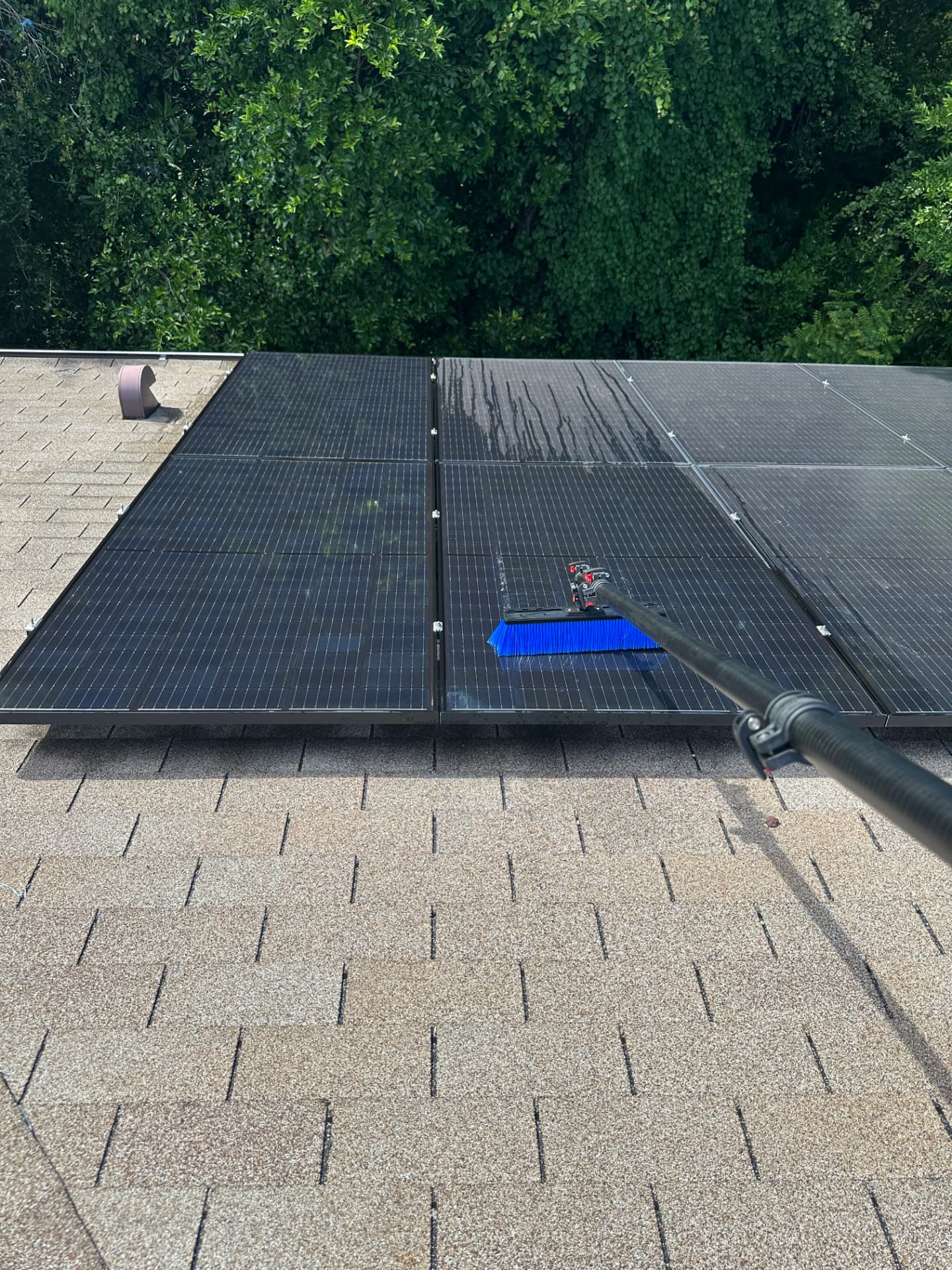
- We photograph the array before and after so you can see the difference
Coverage
Neighborhoods we clean in St. Augustine
- Historic Downtown
- Anastasia Island
- Lincolnville
- Davis Shores
- Vilano Beach
- World Golf Village
- St. Augustine South
FAQ
Solar cleaning FAQs for St. Augustine
Most residential arrays here run $150-$400 depending on panel count, roof pitch and access. Ground-mount arrays cost less, and Club Fresh members get scheduled pricing.
Independent soiling studies put typical losses between 5% and 20%, with the higher end in dusty, pollen-heavy or salt-air environments like coastal Florida. Panels near ponds, dirt roads, construction or heavy tree cover soil the fastest.
Every 6 to 12 months for most homes. Twice a year is the right rhythm if you are near the Intracoastal, under oaks or pines, or in a pollen-heavy neighborhood. Annual cleaning is usually enough for open, inland lots.
No. Rain rinses loose dust but leaves the bonded film of pollen, salt and organic residue behind, and it dries with dissolved minerals that leave spotting. That thin film is exactly what blocks light.
Yes, it can. High pressure risks micro-cracks, forcing moisture past the panel seals and voiding manufacturer warranties. We never use pressure on panels - only deionized water and soft brushing.
No. Detergents leave a residue that attracts dust and can streak the glass. Deionized water dissolves soiling and dries spot-free on its own.
Nearby
Solar cleaning in other cities
Book solar panel cleaning in St. Augustine
Tell us what needs cleaning and we'll send a flat price — no sales visit, no pressure.
- Solar panel cleaning specialists — not an add-on for us
- Licensed, insured and locally owned
- Flagler, Volusia and St. Johns counties