Our specialty
Solar Panel Cleaning in Palm Coast & Flagler County
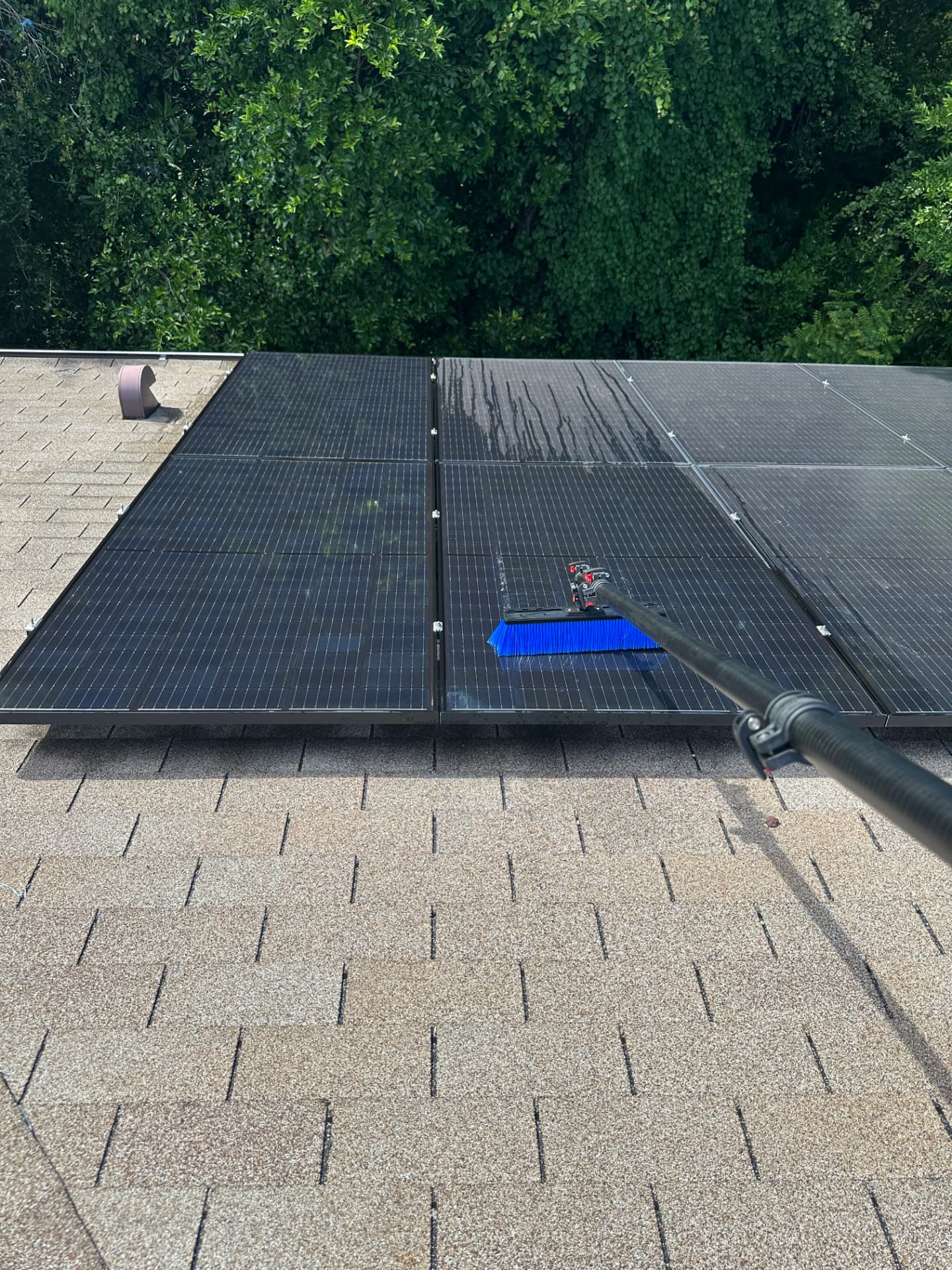
Florida gives solar owners world-class sunshine and world-class grime. Pollen, salt air, lovebug residue, roof runoff and pond mineral spray build a film across the glass that light has to fight through before it ever reaches a cell. Fresh Rinse of Belle Terre cleans residential and small-commercial arrays across Palm Coast, Flagler and St. Johns counties using deionized pure water and soft brushes only.
5–20%
Output commonly lost to soiling
0 PSI
Pressure used on panel glass
6–12 mo
Recommended Florida interval
< 2 hrs
Typical residential visit
Quick answer
What is solar panel cleaning and how often is it needed?
Solar panel cleaning is a no-pressure wash of the panel glass using deionized water and a soft brush. In Florida, most rooftop arrays should be cleaned every 6 to 12 months; soiled panels commonly lose 5-20% of their output, and that production comes back once the glass is clear.
Why it happens
Why Florida panels lose output
It isn't one thing — it's everything Florida throws at a roof, all at once.
Relentless Florida sun
Year-round UV bakes soiling into the glass faster than milder climates, so the film builds even between rains.
Salt air and coastal spray
Intracoastal and ocean-adjacent homes pick up a fine salt film that dulls glass and resists rinsing.
Pollen and lovebug seasons
Spring pine pollen and lovebug swarms leave a sticky residue that plain rain can't fully remove.
Canopy and pond drift
Oak, pine debris and pond mineral spray settle across arrays shaded by trees or near water features.
Process
How we clean an array
- 1
Array inspection
We check panel condition, seals, mounting and any visible wiring issues, and note heavy shading or debris traps before touching the glass.
- 2
Dry debris removal
Leaves, pine needles, nesting material and lovebug crust are cleared from panel edges and the roof surface beneath so runoff cannot redeposit grime.
- 3
Pure water soft wash
Deionized water and a purpose-built soft brush lift the soiling film. No detergents, no abrasives, no pressure against the glass or frame.
- 4
Spot-free rinse and report
A final deionized rinse dries without mineral spotting, and you get before/after photos plus anything we noticed on the roof.
Pricing
Flat, upfront pricing
Most Palm Coast-area residential arrays fall in the $150-$400 range depending on panel count, roof pitch and access. We quote a flat price before we start.
What's included
- Rooftop residential arrays (shingle, tile and metal roofs)
- Ground-mount and pool-heating solar arrays
- Small commercial and HOA-managed systems
- Bird deterrent and debris-guard recommendations
- Bundled with roof washing or house soft washing on the same visit
Why it pays for itself
- Soiling losses in humid, pollen-heavy climates commonly run 5-20% of production
- Deionized water dries spot-free, so no detergent residue is left to attract dirt
- Zero pressure washing on glass - pressure can force water past panel seals
- Most Palm Coast homes are done in a single visit, typically under two hours
- We photograph the array before and after so you can see the difference
Proof
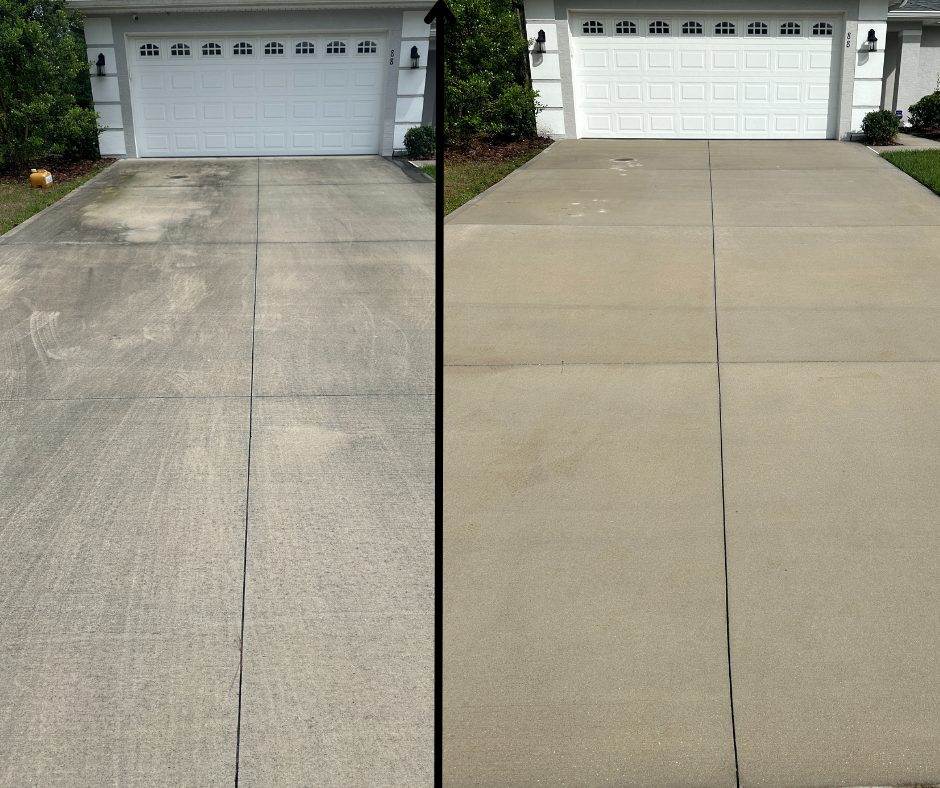
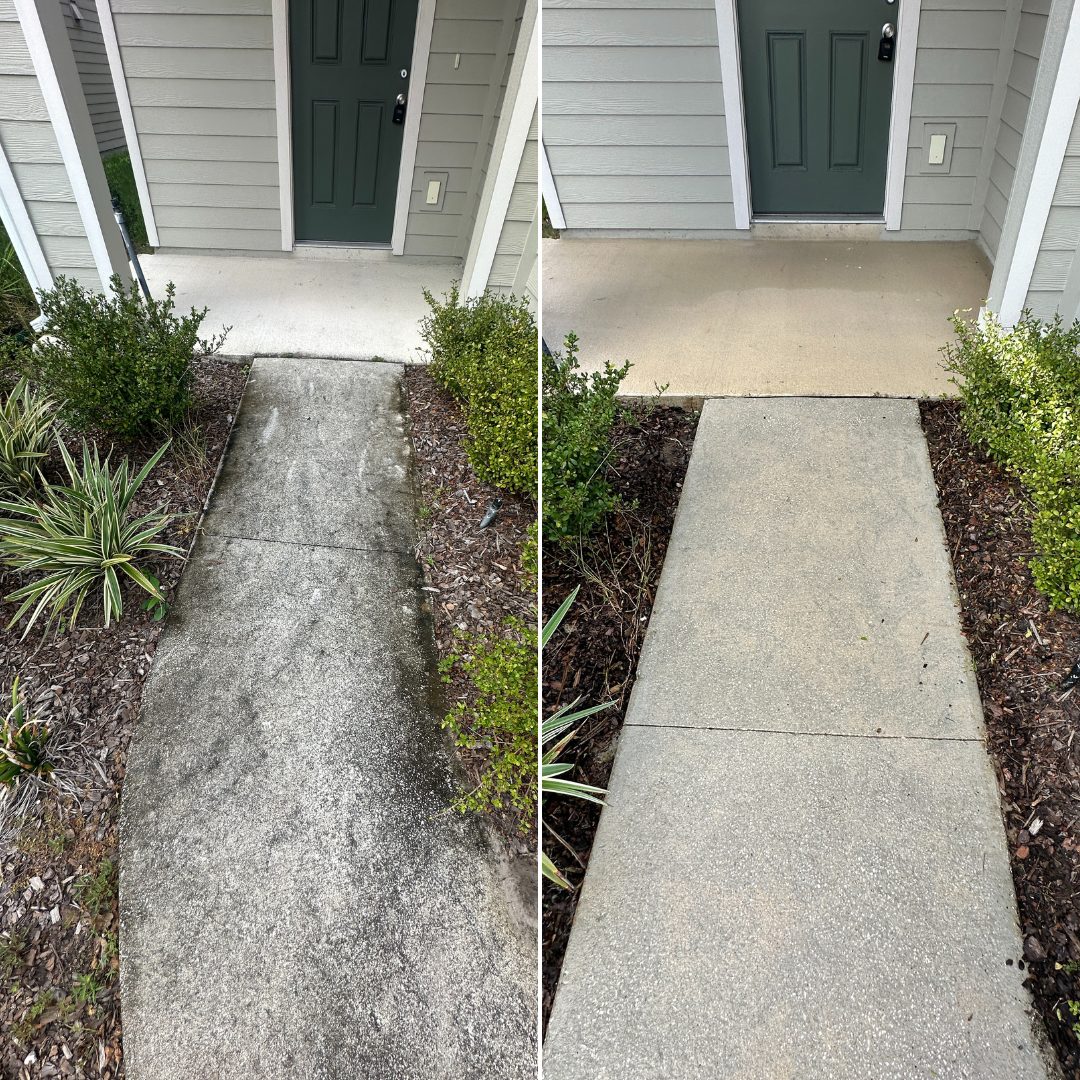
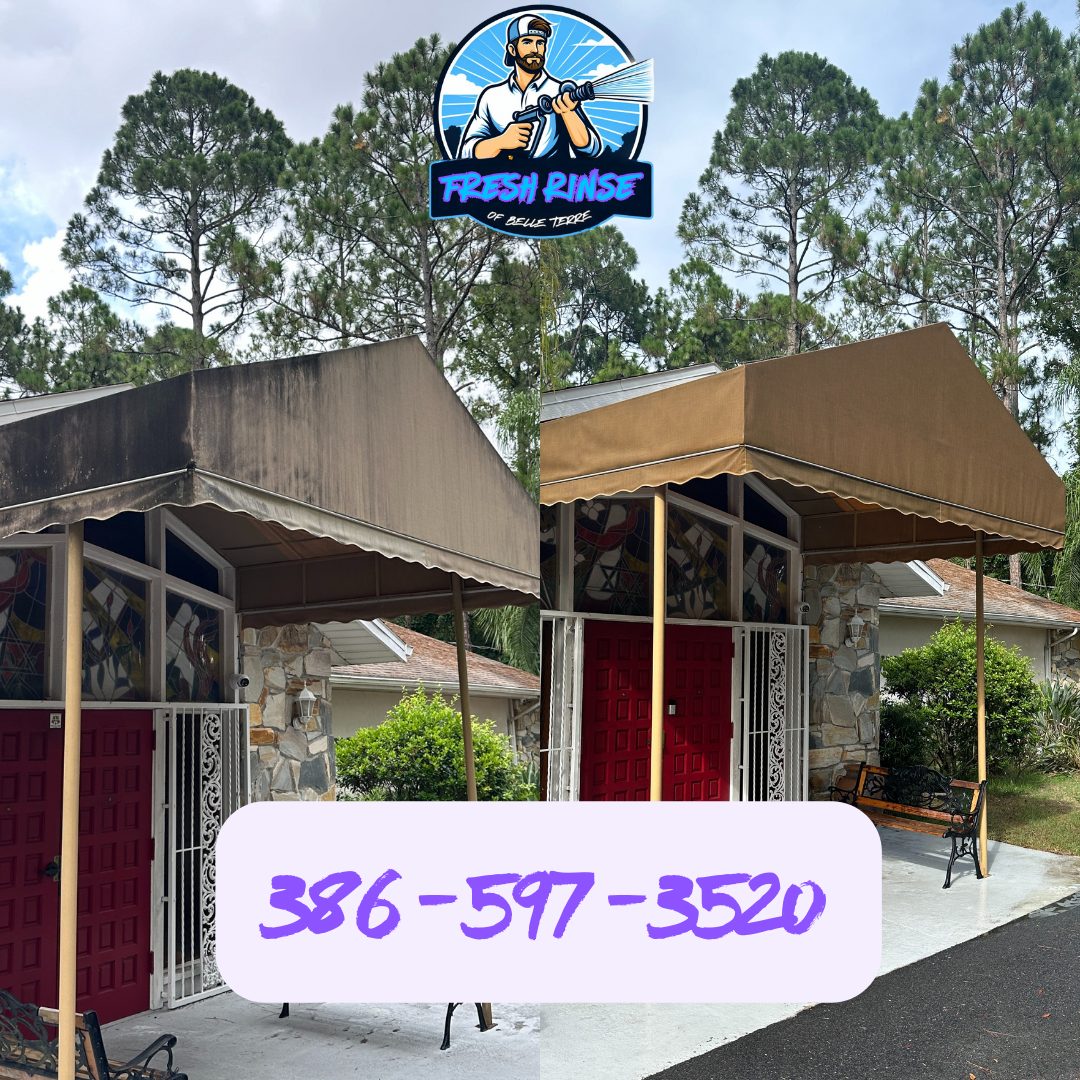
Before and after, every visit
We photograph the work so you see exactly what changed.
FAQ
Solar panel cleaning FAQs
Independent soiling studies put typical losses between 5% and 20%, with the higher end in dusty, pollen-heavy or salt-air environments like coastal Florida. Panels near ponds, dirt roads, construction or heavy tree cover soil the fastest.
Every 6 to 12 months for most homes. Twice a year is the right rhythm if you are near the Intracoastal, under oaks or pines, or in a pollen-heavy neighborhood. Annual cleaning is usually enough for open, inland lots.
No. Rain rinses loose dust but leaves the bonded film of pollen, salt and organic residue behind, and it dries with dissolved minerals that leave spotting. That thin film is exactly what blocks light.
Yes, it can. High pressure risks micro-cracks, forcing moisture past the panel seals and voiding manufacturer warranties. We never use pressure on panels - only deionized water and soft brushing.
No. Detergents leave a residue that attracts dust and can streak the glass. Deionized water dissolves soiling and dries spot-free on its own.
You can rinse ground-mounted panels with a hose, but rooftop DIY cleaning means ladder work on a wet, sloped roof, tap water that leaves mineral spots, and a real risk of scratching the anti-reflective coating. The safety math rarely works out.
Yes. Cleaning is done with the array live, using non-conductive pure water and insulated tools. We do not open electrical enclosures.
Early morning or late afternoon, when the glass is cool. Cleaning hot panels causes rapid evaporation, spotting and thermal stress.
Cleaning with pure water and soft brushes is the method most manufacturers specify. Pressure washing and abrasive pads are what typically void coverage.
Yes. Pool heating collectors get the same debris and algae buildup, and we clean them with the same low-impact approach.
A typical 15-25 panel residential array takes 60-120 minutes including inspection, debris removal and the final rinse.
Yes. We handle small commercial rooftops and HOA-managed systems in Flagler, Volusia and St. Johns counties, with scheduled maintenance available.
Local pages
Solar panel cleaning near you
Local conditions change how fast panels soil. Pick your city for specifics.
Get your solar array producing again
Tell us what needs cleaning and we'll send a flat price — no sales visit, no pressure.
- Solar panel cleaning specialists — not an add-on for us
- Licensed, insured and locally owned
- Flagler, Volusia and St. Johns counties